ATM Card AMC: Complete Guide to Annual Maintenance Charges
ATM card AMC refers to the Annual Maintenance Charges applied by banks for maintaining debit card services and related facilities. This guide explains AMC full form in banking, ATM AMC charges meaning, SBI debit card AMC fees, and why these charges are deducted from bank accounts.

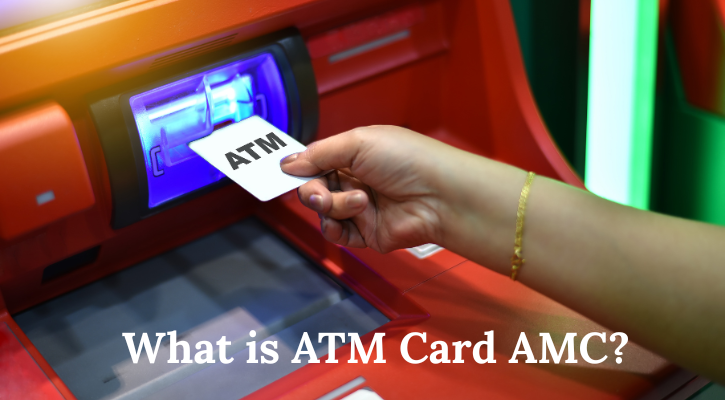
You receive your bank statement and see a peculiar deduction tagged as 'AMC'. You wonder about it and try to find answers to such questions as: What is this? Should I pay for it? Is it possible to evade it?
Well, you are not alone. Many people holding bank accounts in India come across such a charge every year and don't have any idea what it is and why they need to pay for it. Let us provide some information about the AMC of ATM cards.
What is an ATM Card AMC?
AMC stands for Annual Maintenance Charge.
The charge is an annual fee charged by your bank for maintenance of your debit card (ATM card). Simply put, it is a fee for having your debit card functional and safe during the whole year.
Why Are Bank Charges for AMC?
Banks charge you AMC due to the following reasons:
Infrastructure Expenses: Banks invest a lot of money in running their nationwide ATM network and maintaining it.
Security Services: There are fraud detection and blocking options, encryption and other services which keep your funds safe.
Customer Service: You have a 24/7 hotline for solving all kinds of problems related to your account.
Production and Issuance: There are costs associated with production of your physical card and its replacement when necessary.
Compliance with Regulations: Banks have to comply with guidelines set by the RBI and other regulations and standards.
Simply put, banks charge AMC because of the above services. If you agree whether it is justifiable is another issue.
Read More: Secured vs Unsecured Personal Loan: Complete Guide
Meaning of "ATM Pending AMC"
There are several confusing terms used in the banking world. One such term is "pending AMC". The literal meaning of pending AMC is that the AMC charge has been levied but not yet debited from the account.
Why Does AMC Get Pending?
Reason #1: Insufficient Balance
If your account balance is lower than the AMC amount, the deduction will be postponed till you deposit additional money. For example, if the AMC charge is ₹147.50 (for SBI classic card with GST) and the balance in your account is ₹50, then the charge will remain pending till you deposit ₹147.50.
Reason #2: Recent Card Activation
After a new card is activated, the AMC charge may be shown pending by the bank system till it processes (usually 3-7 days).
Reason #3: Processing for Waiver
If you are eligible for AMC charge waiver (for maintaining minimum balance, for instance), the pending charge is usually the process of verifying this eligibility.
Reason #4: Bank System Delay
Sometimes the technical delay may occur in the bank's system and cause the AMC charge to be shown pending.
How To Act Upon Pending AMC?
The pending charge usually gets deducted within 30 days. However, if this doesn't happen:
Reminder notices will be sent via email/SMS by the bank
After 60 days card services may be limited
Card might be suspended if the problem persists further
There may be late fee imposed (usually ₹50-₹100)
What to Do: If you find pending AMC in your bank statement, either make the necessary deposit to settle the charge or call the bank customer service department to ask whether you are eligible for the AMC waiver.
ATM Card AMC Charges of Major Banks in India (2026)
Here is what you should pay in AMC charges across the leading banks in India:
ATM Card AMC of SBI (State Bank of India)
Classic / Visa Classic Card: ₹125 + 18% GST = ₹147.50 per year
Silver Card: ₹200 + GST = ₹236 per year
Gold Card: ₹300 + GST = ₹354 per year
Platinum Card: ₹425 + GST = ₹501.50 per year
Waiver: if you maintain ₹10,000 average balance (metro area), ₹5,000 (semi-urban), ₹2,500 (rural)
ATM Card AMC of HDFC Bank
Classic/Visa Classic: ₹100-₹150 + GST
Platinum Card: ₹300-₹500 + GST
Signature/World Card: ₹500-₹750 + GST
Waiver: available if you maintain ₹5,000-₹10,000 minimum balance (depending on the card type)
ATM Card AMC of ICICI Bank
Basic Debit Card: ₹0 (NO AMC)
Coral/Expressions Card: ₹499 + GST = ₹588.82
PIN Regeneration Charge: ₹25
Remark: It is unique in that it does not charge any AMC on regular debit cards
ATM Card AMC of Axis Bank
Visa Classic: ₹200 per year
Visa Platinum: ₹500 per year
Burgundy World Card: ₹1,000 per year
Waiver: if you maintain ₹5,000-₹10,000 minimum balance
Other Banks
PNB: ₹100-₹150 (waivable with min. balance)
Indian Bank: ₹60 (rural), ₹120 (urban)
Bank of Baroda: ₹100-₹200
Canara Bank: ₹100-₹150
Read More: What is Insurance Policy? Complete Guide
Quick Comparison Table: ATM Card AMC Across Banks
Verdict: ICICI Bank is the clear winner for cost-conscious users (zero AMC on basic cards).
Card Type & Its Impact on AMC: Basic vs. Premium
Your AMC depends heavily on the card type you choose. Here's the trade-off:
Basic/Classic Cards (Lowest AMC)
Annual fee: ₹125-₹150 (before GST)
Features: Basic ATM withdrawals, balance checks, limited transactions
Best for: Budget-conscious, light users, students
Free ATM withdrawals: Usually 2-3 per month; charges beyond that
Premium/Platinum Cards (Higher AMC)
Annual fee: ₹300-₹750 (before GST)
Features: Unlimited free ATM withdrawals, higher daily limits, cashback/rewards
Best for: Frequent users, high spenders, benefit seekers
Free ATM withdrawals: Usually unlimited
Elite/World Cards (Highest AMC)
Annual fee: ₹1,000-₹3,000 per year
Features: International transaction benefits, lounge access, travel insurance
Best for: Frequent travelers, international users
Additional benefits: Concierge service, priority support
Decision Framework:
If you withdraw cash 15+ times/month: Premium card saves money (unlimited free withdrawals save ₹600-₹1,800 annually)
If you withdraw 2-3 times/month: Basic card saves money (lower AMC outweighs extra withdrawal charges)
If you travel internationally: Elite card pays for itself through benefits
How to Avoid or Waive ATM Card AMC
Strategy #1: Maintain Minimum Balance
It is the simplest way and is quite effective.
Process: Banks waive AMC fees if you maintain an average monthly balance. The exact amount depends on:
SBI: ₹10,000 (metropolitan area), ₹5,000 (semi-urban), ₹2,500 (rural)
HDFC: ₹5,000 - ₹10,000
ICICI: NA (zero AMC anyway on basic)
Axis: ₹5,000 - ₹10,000
Average balance = Total balance in all days of month ÷ number of days
Advice: Maintain balance slightly more than minimum (₹6,000 if the minimum is ₹5,000). Waiver applies in the next month if the average balance was maintained.
Strategy #2: Select Zero-AMC Cards
ICICI Bank: Zero AMC on standard debit cards (the best way)
Salary accounts: Most banks waive AMC fees for salaried customers
Student accounts: Zero AMC fees until graduation
Senior citizen accounts: Usually waived or reduced for senior citizens
Strategy #3: Ask Bank for Waiver of Fees
If you are a long-time customer with good track record:
Contact your bank's customer support services
Request AMC waiver based on customer relationship with the bank
Success rate: 30%-50% (banks usually agree to retain the customers)
Higher chances for long-term customers (>5 years), high balance customers, salary account customers
Strategy #4: Switch to Digital-Only Banks
New fintech banks provide zero or low AMC:
Jupiter: Zero AMC fees + digital-first model
Fibe: Low charges + emphasis on affordability
Navi: Cost-effective banking
Strategy #5: Change to Zero-AMC Bank
If you want to save money:
Open ICICI Bank basic account (zero AMC fees)
Maintain minimum balance for any routine transactions there
Use it as your primary card to avoid annual fees
Hidden Costs Apart from AMC: Full Fee Structure
AMC is just one fee. Here are some additional charges:
ATM withdrawal charges: ₹10-₹30 for each withdrawal in excess of free limit at other banks' ATMs
Transaction charges: ₹10-₹50 for online and mobile transactions (varies depending on the bank)
Card replacement fees: ₹200-₹300 + 18% GST on card replacement when the card expires
PIN regeneration fees: ₹25-₹50 for each PIN generation
International transaction charges: 1%-3.5% markup on foreign currency transactions
Bank statement charges: Some banks charge ₹5-₹25 for printing statements
Real-World Example:
Basic card holder with ₹125 AMC who:
Makes 10 extra ATM withdrawals (₹20 each) = ₹200
Replaces card once a year = ₹236 (including GST)
Total annual cost = ₹561, not ₹125
While budgeting your banking charges, consider the full fee structure, not just AMC.
CreditMitra: Understanding Your Complete Financial Costs
Understanding ATM Card AMC is just the first step toward optimizing your financial costs. The reality is that banking involves multiple fees, from AMC to transaction charges to hidden costs.
CreditMitra helps you navigate this complexity.
As a comprehensive fintech platform, CreditMitra doesn't just explain ATM Card AMC, it helps you:
Compare multiple banking products to find the lowest-cost option
Calculate total cost of ownership for different card types
Understand all hidden charges before opening an account
Choose financial products aligned with your usage patterns
Whether you're deciding between banks, choosing between card types, or optimizing your complete financial strategy, CreditMitra provides transparent tools and guidance.
Start your financial optimization journey today on CreditMitra.
FAQ: Common Questions About ATM Card AMC
Q: Is ATM Card AMC mandatory?
A: Not legally mandatory, but enforced by banks as terms & conditions for keeping the card. You can avoid it by: (1) Maintaining minimum balance (easiest), (2) Choosing zero-AMC cards like ICICI, (3) Requesting waiver from bank, (4) Switching to salary/student accounts (if eligible).
Q: What happens if I don't pay the pending AMC?
A: Banks send reminders (usually 7-15 day grace period). After grace period: ATM withdrawals may be blocked, card services restricted, late fees charged (₹50-₹100), and potential card deactivation. If you see pending AMC, either deposit funds to cover it or contact your bank about waiver eligibility.
Q: Which bank has zero AMC on debit cards?
A: ICICI Bank offers zero AMC on standard debit cards, the best option for cost-conscious users. SBI, HDFC, Axis offer waivers with minimum balance. Salary and student accounts across all banks often have zero AMC.
Q: Can I change my card type to lower AMC?
A: Yes, contact your bank to downgrade from premium to basic card. Process takes 7-30 days. Drawback: You lose premium benefits (unlimited withdrawals, cashback, rewards). Better approach: Request AMC waiver first before downgrading.
Q: Why does SBI charge ₹125 + GST instead of just ₹125?
A: ₹125 is the base AMC; 18% GST is government tax on financial services (mandatory). Total: ₹147.50. All banks charge GST on AMC, not SBI-specific. When comparing banks, always include GST in calculations.
Q: Does maintaining minimum balance always waive AMC?
A: Almost always, yes. Most banks automatically waive if average balance is maintained. Required minimum: ₹2,500-₹10,000 depending on bank and account type. Check your bank's specific requirement. Calculate if maintaining the balance is worth the AMC savings.
About the Author

Divya Kumari
SEO Strategist & Finance WriterDivya Kumari is an SEO & Content Strategist with experience in organic traffic growth, topical authority building, and content-led SEO strategies. She specializes in creating user-focused content for finance and SaaS websites, helping brands improve visibility through structured content planning, internal linking, and search optimization techniques.
Borrow. Protect. Grow.
All in one app.
- Compare loan offers
- Buy insurance in minutes
- Invest in mutual funds
- Check credit score free
- Track all your applications


Explore More Articles
7 Days Loan App: Real Cost, Risks and Safer Options

What to Do When Your Travel Budget Falls Short
On this page
- What is an ATM Card AMC?
- Meaning of "ATM Pending AMC"
- ATM Card AMC Charges of Major Banks in India (2026)
- Quick Comparison Table: ATM Card AMC Across Banks
- Card Type & Its Impact on AMC: Basic vs. Premium
- How to Avoid or Waive ATM Card AMC
- Hidden Costs Apart from AMC: Full Fee Structure
- CreditMitra: Understanding Your Complete Financial Costs
- FAQ: Common Questions About ATM Card AMC
About the Author
Divya Kumari
SEO Strategist & Finance WriterDivya Kumari is an SEO & Content Strategist with experience in organic traffic growth, topical authority building, and content-led SEO strategies. She specializes in creating user-focused content for finance and SaaS websites, helping brands improve visibility through structured content planning, internal linking, and search optimization techniques.
Borrow. Protect. Grow.
All in one app.
- Compare loan offers
- Buy insurance in minutes
- Invest in mutual funds
- Check credit score free
- Track all your applications