What is a Credit Report? Complete 2026 Guide
Want to know what a credit report is? This guide explains credit report meaning, what information lenders check, how it affects loan approvals, and ways to access your free credit report online.

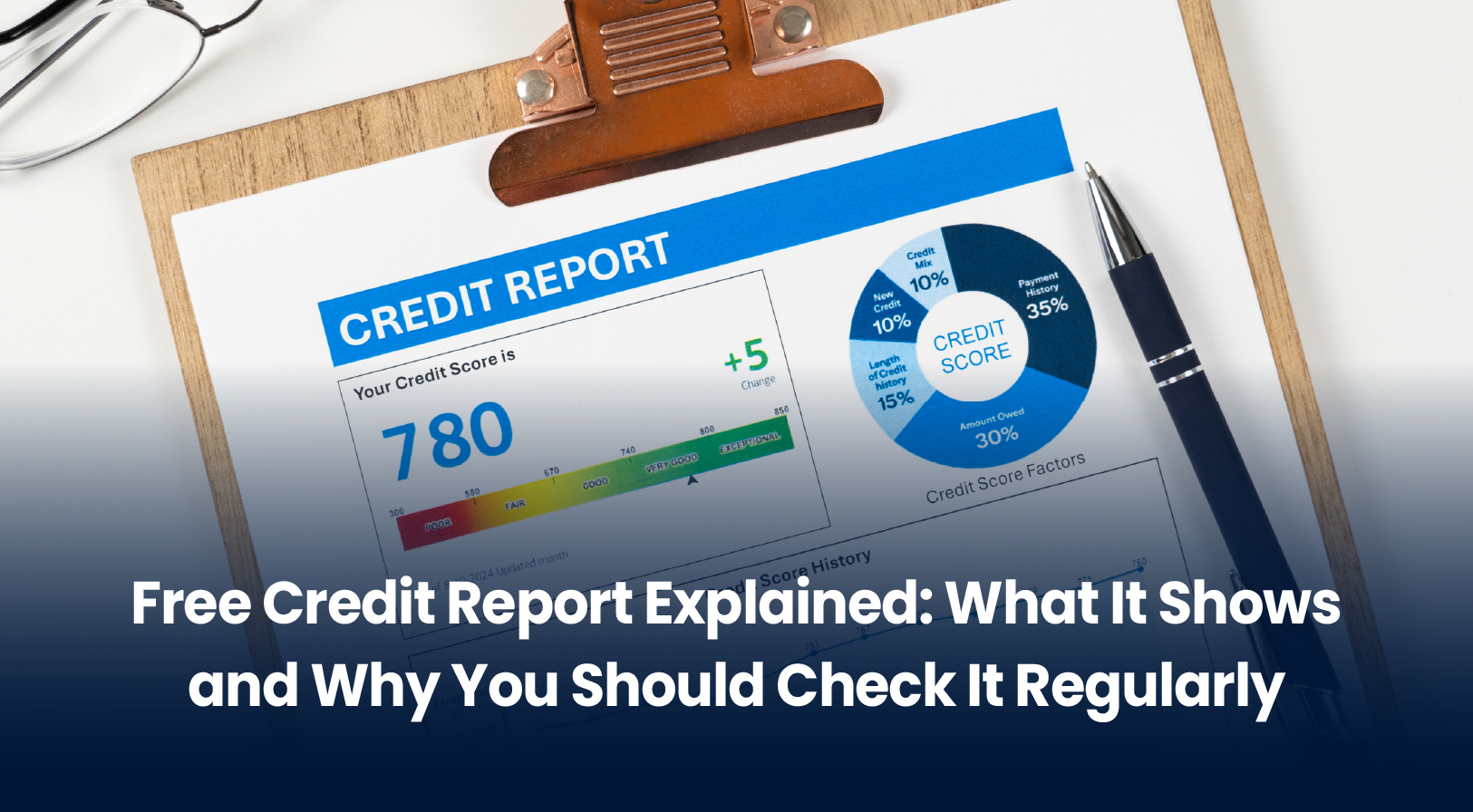
You apply for a personal loan. The bank says “approved” or “rejected” within hours. The decision isn’t random. The bank read your credit report, a permanent record of your financial behavior, and decided whether to trust you with money.
This report determines everything: whether you get the loan, what interest rate you pay, and how much you can borrow. Yet most Indians don’t know what’s in it, how to access it, or what lenders are actually reading.
Here’s complete clarity on credit reports.
What is a Credit Report?
A credit report is a detailed record of your financial behavior maintained by credit bureaus. It includes: loans you’ve taken, credit cards you own, how consistently you pay bills, defaults, and enquiries lenders made about you.
Think of it like your financial resume. Lenders read it before deciding whether to lend to you.
Key characteristics:
- Maintained by 4 independent credit bureaus
- Updated monthly with new data from lenders
- Accessible free once yearly
- Directly impacts loan approval odds and interest rates
- Stays on record for 7 years
Credit Report vs. Credit Score: Key Difference
These terms confuse many people. They’re related but different.
Credit Report = The Book Detailed record of everything you’ve borrowed, how you paid back, defaults, enquiries. 5+ pages typically. Contains complete information. Updated continuously.
Credit Score = The Summary Single 3-digit number (300-900) derived from report data. Quick assessment. Updated monthly/quarterly. Like a report card grade.
Example: Your report shows 3 loans (home, car, personal), 2 credit cards, perfect repayment for 5 years, zero defaults. From this data, bureaus calculate your score = 780 (excellent).
Lenders use both: Score for instant assessment (“780 = approve”), Report for detailed review (checking specific accounts, payment patterns, enquiries).
Read More: Credit Score vs CIBIL Score: Complete Guide
What’s Inside Your Credit Report?
Your report has 4 main sections:
1. Personal Information Name, DOB, Aadhaar/PAN, current address, employment details. Identifies you uniquely.
2. Credit Accounts Every loan and credit card you’ve ever taken. Shows: account open date, balance, status (active/closed), credit limit, payment due date. Lists home loans, car loans, personal loans, gold loans, credit cards.
3. Payment History Most important section. Shows: on-time payments (good), late payments (bad), defaults (very bad), how late (30/60/90+ days). Defines your creditworthiness.
4. Credit Enquiries Lists every hard inquiry (when lender checks your report for loan decision). Shows: lender name, date, loan type. Multiple enquiries in short period = red flag (“desperately seeking credit”).
The 4 Credit Bureaus in India
1. CIBIL (TransUnion CIBIL)
- Established: 2000 (first in India)
- Market share: 70%+ (most used by lenders)
- Score range: 300-900
- Access: cibil.com
2. Experian
- Market share: Growing, used by many banks
- Score range: 300-850
- Access: experian.in
3. Equifax
- Growing presence, used by institutions
- Score range: 300-850
- Access: equifax.co.in
4. CRIF High Mark
- Specialized focus
- Score range: 300-850
- Access: crif.com
All 4 are RBI-licensed and valid. Most lenders prefer CIBIL but all are legitimate.
Why Lenders Care About Your Report
Lenders use reports to answer 5 critical questions:
- Do you pay bills on time? (payment history = most important)
- Do you default? (defaults = reject immediately)
- How much credit do you already have? (high debt = risky)
- How desperate are you for credit? (multiple enquiries = red flag)
- How stable is your financial behavior? (consistency = positive)
Your report determines: Approval odds, interest rate, loan amount, loan terms.
How Credit Report Affects Loan Approval: Real Examples
1: Clean Report, High Score
- Report: 5 loans paid on time, zero defaults, low enquiries
- Score: 760
- Loan decision: Approved at 11% for ₹20 lakh
2: Poor Report, Low Score
- Report: 2 defaults, late payments, multiple enquiries
- Score: 580
- Loan decision: Rejected by banks, approved by NBFC at 22% for ₹5 lakh
3: Improving Report
- Report: Old default (3 years ago), now perfect payments for 1.5 years
- Score: 710
- Loan decision: Approved at 13% for ₹10 lakh (better than Example 2, worse than Example 1)
Single defaults cost you ₹2-5 lakh in extra interest over loan tenure.
How to Check Your Credit Report (Free)
1: Choose Bureau CIBIL (most common), Experian, Equifax, or CRIF.
2: Visit Website
- CIBIL: cibil.com
- Experian: experian.in
- Equifax: equifax.co.in
- CRIF: crif.com
3: Register Enter name, Aadhaar/PAN, phone, email.
4: Verify OTP Receive SMS on registered mobile, enter OTP.
5: Download Report downloads as PDF instantly (5-10 minutes total).
Free Quota: One annual report per bureau (4 bureaus = 4 free reports yearly). Additional reports cost ₹99-₹299.
How to Read Your Credit Report
Personal Info Section Verify name, address, employment spelled correctly. Report errors immediately.
Credit Accounts Section Check: All loans/cards listed? Amount correct? No accounts you didn’t open (fraud check)?
Payment History Section Most important. Look for: Red icons (late payments), Default notices, Current status (active/closed). Multiple reds = poor history.
Enquiries Section Check recent enquiries. Too many (10+ in 6 months) = appearing desperate for credit = lender red flag.
Errors in Credit Report? How to Dispute
Common Errors:
- Wrong loan amount listed
- Payment marked late when it was on time
- Closed loan still showing as active
- Account listed twice
- Someone else’s info in your report
Dispute Process:
- Note the error
- Visit bureau website
- File dispute electronically
- Provide supporting documents (payment proof, bank statements)
- Bureau investigates within 30 days
- Report corrected and reissued
Takes 30-45 days total. Worth pursuing, even small errors cost money.
Read More: Why You Should Do a Free Credit Report Check Before Applying for a Loan
How to Improve Your Credit Report
Strategy 1: Pay On-Time, Every Time
- Set automatic payments
- Don’t miss even one EMI
- On-time payments improve score fastest (takes 6 months of perfect payment to see improvement)
Strategy 2: Reduce Credit Utilization If you have ₹1L credit card limit, use only ₹30K (30% utilization). High utilization (80%+) signals credit desperation.
Strategy 3: Keep Old Accounts Active Don’t close old credit cards/loans. Older account history = better score. Average account age matters.
Strategy 4: Don’t Apply for Multiple Loans Simultaneously Each application = hard enquiry = score drop. Wait 3-6 months between applications.
Strategy 5: Wait Out Defaults Old defaults impact less. 3-year-old default = minimal impact. 7-year-old default = removed entirely.
CreditMitra: Simplified Credit Report Monitoring
Traditional: Check CIBIL at cibil.com, Experian at experian.in, Equifax at equifax.co.in, CRIF at crif.com (4 separate websites, 4 registrations, 4 downloads = 30+ minutes).
CreditMitra: All 4 reports consolidated in one dashboard. See all 4 scores, understand variations, identify errors faster, monitor improvements across all bureaus.
FAQ: Your Credit Report Questions
Q: Can I check my report for free?
A: Yes. One free annual report from each of 4 bureaus = 4 free reports yearly. Takes 5-10 minutes to download. Additional checks cost ₹99-₹299.
Q: Do defaults ever disappear?
A: After 7 years from resolution (when you finally pay). Before that, appears with decreasing impact over time. 1-year-old default = severe impact. 5-year-old default = minimal impact.
Q: Does checking my own report hurt my score?
A: No. Checking yourself = soft inquiry (zero impact). Only when lender checks = hard inquiry (impacts score 5-10 points).
Q: Can I get a loan with a bad report?
A: Yes, harder but possible. Options: NBFC approval (higher rates), co-applicant with good profile, secured loan, larger down payment.
Q: Why does my CIBIL score differ from other bureau scores?
A: Different calculation methodologies. Variations of 10-50 points normal. All equally valid.
Q: How often should I check?
A: Minimum 2 times yearly (before loan applications). Ideal 4 times yearly (quarterly) to catch errors early and monitor improvement.
Your Next Step
- Check your free annual report – Visit cibil.com or CreditMitra
- Review for errors – Dispute any inaccuracies found
- Understand your score – Higher = easier loan approval
- Improve if needed – On-time payments, lower utilization
- Monitor quarterly – Catch errors and track improvements
Your credit report is your financial identity. Lenders read it within seconds. Spend 10 minutes reading yours yearly. It could save you ₹5-10 lakh in extra interest over your lifetime.
About the Author

Divya Kumari
SEO Strategist & Finance WriterDivya Kumari is an SEO & Content Strategist with experience in organic traffic growth, topical authority building, and content-led SEO strategies. She specializes in creating user-focused content for finance and SaaS websites, helping brands improve visibility through structured content planning, internal linking, and search optimization techniques.
Borrow. Protect. Grow.
All in one app.
- Compare loan offers
- Buy insurance in minutes
- Invest in mutual funds
- Check credit score free
- Track all your applications


Explore More Articles

What to Do When Your Travel Budget Falls Short

How to Finance Your Dream Vacation Responsibly
On this page
- What is a Credit Report?
- Credit Report vs. Credit Score: Key Difference
- What's Inside Your Credit Report?
- The 4 Credit Bureaus in India
- Why Lenders Care About Your Report
- How Credit Report Affects Loan Approval: Real Examples
- How to Check Your Credit Report (Free)
- How to Read Your Credit Report
- Errors in Credit Report? How to Dispute
- How to Improve Your Credit Report
- CreditMitra: Simplified Credit Report Monitoring
- FAQ: Your Credit Report Questions
- Your Next Step
About the Author
Divya Kumari
SEO Strategist & Finance WriterDivya Kumari is an SEO & Content Strategist with experience in organic traffic growth, topical authority building, and content-led SEO strategies. She specializes in creating user-focused content for finance and SaaS websites, helping brands improve visibility through structured content planning, internal linking, and search optimization techniques.
Borrow. Protect. Grow.
All in one app.
- Compare loan offers
- Buy insurance in minutes
- Invest in mutual funds
- Check credit score free
- Track all your applications