DPD Full Form: What It Means & Why It Matters for Your Credit Score
DPD stands for Days Past Due, a banking and credit reporting term used to indicate the number of days a loan or credit payment is overdue. This guide explains the DPD full form, its significance in CIBIL reports, how lenders interpret DPD values, and the impact of delayed payments on your credit profile.

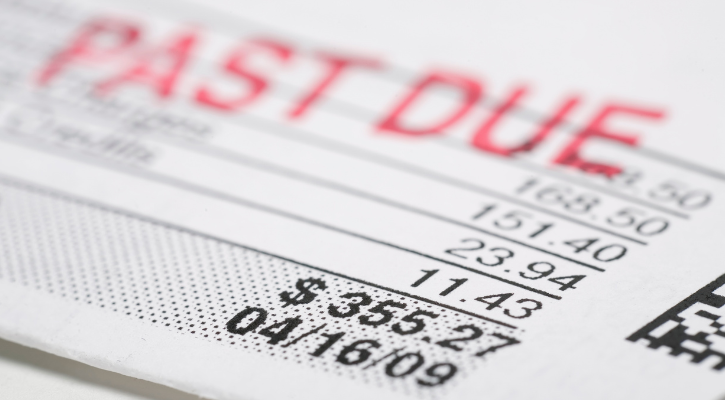
You check your CIBIL report and see numbers like “000,” “030,” “060” under a column labeled “DPD.”
And, You have no idea what these mean.
You ignore it and apply for a personal loan anyway.
Two days later, your loan gets rejected. The lender says: “Your DPD history is concerning.”
Now you’re confused and frustrated. You wish someone had explained what DPD actually means before you applied.
This guide explains DPD completely, what it is, how it’s calculated, why it matters, and most importantly, how to avoid damaging yours.
What Is DPD? (Full Form: Days Past Due)
DPD = Days Past Due
It means: How many days late you are paying your EMI or credit card bill.
Simple definition: If your credit card bill is due on the 10th of the month and you pay on the 20th, your DPD for that month is 10 (days past due).
In your CIBIL report, this appears as a number: “010” (10 days late).
Why banks care about DPD:
- It shows your payment discipline
- It predicts if you’ll default on future loans
- It’s the single most important factor after CIBIL score itself
A “000” DPD means you paid on time (perfect). A “030” means 30 days late (concerning). A “090+” means 90+ days late (account likely to default).
Where Does DPD Appear?
DPD appears in the “Payment History” section of your CIBIL report.
When you request your CIBIL report, you’ll see a grid with months (columns) and accounts (rows). Under each month, you’ll see DPD values.
Example grid:
Account: SBI Personal Loan
Jun | Jul | Aug | Sep | Oct | Nov | Dec
000 | 000 | 000 | 030 | 000 | 000 | 000
This shows: You were 30 days late in September, but on-time all other months.
Every bank and NBFC reports your DPD monthly to all credit bureaus (CIBIL, Experian, Equifax, CRIF).
Understanding DPD Values: What Each Code Means
When you see DPD values in CIBIL, they mean:
Numeric Values:
- 000 = Payment made on time (IDEAL – keep this)
- 030 = 30 days late (CONCERNING – lenders reduce rates 2-5%)
- 060 = 60 days late (SERIOUS – loan rejections possible)
- 090 = 90 days late (CRITICAL – account classified as NPA)
Non-Numeric Codes:
- XXX = Lender didn’t report data that month (neutral – no impact)
- STD = Standard account performing normally (good)
- SUB = Substandard account (has DPD 30-89 days – poor)
- DBT = Doubtful account (has DPD 90-179 days – very poor)
- LSS = Loss account (likely unrecoverable – worst)
What to aim for: 000 or STD across all accounts. Anything else damages your creditworthiness.
Read More: Credit Score vs CIBIL Score: Complete Guide
How Is DPD Calculated?
Example: ₹50,000 personal loan, due date 10th of each month
Scenario 1: On-Time Payment
- Due date: June 10th
- Payment made: June 10th
- DPD for June: 000 (on time – perfect)
and, Scenario 2: Late Payment
- Due date: June 10th
- Payment made: June 30th
- Days late: 20 days
- DPD for June: 020 (20 days past due)
Scenario 3: Very Late Payment
- Due date: June 10th
- Payment made: August 5th (skipped July too)
- Days late in June: 56 days (June 10 + 56 days = August 5)
- DPD for June: 056
- DPD for July: 086 (even worse since July also unpaid)
Key insight: The longer you delay, the higher the DPD. Even 1 day late = DPD of 001. But most lenders show 030 or higher as concerning.
How DPD Damages Your CIBIL Score
DPD directly damages CIBIL score. A single payment delay of 30 days (030 DPD) reduces CIBIL score by 50-75 points. Multiple delays or 60-90 day delays reduce score by 100-150 points. If DPD exceeds 90 days, the account is classified as NPA (Non-Performing Asset), reducing CIBIL score below 600, making future credit very difficult to obtain.
Real example:
- Current CIBIL: 750 (good credit)
- One payment 30 days late (030 DPD)
- New CIBIL: 675 (75-point drop)
- Future loan rate increases by 2-5%
- On ₹5 lakh personal loan over 5 years: ₹5-15K more in interest
DPD Impact on Loan Approval
Banks and NBFCs heavily weight DPD when approving loans:
With 000 DPD (on-time payment history):
- Personal loan: Approved at 10-13% interest
- Approval odds: 95%+
With 030 DPD (30 days late in past):
- Personal loan: Approved at 14-16% interest (or rejected)
- Approval odds: 60%
- Extra cost: ₹5-10K on ₹5L loan
And, With 060 DPD (60 days late):
- Personal loan: Rejected by banks, approved by NBFCs at 18-22%
- Approval odds: 40%
With 090+ DPD (90+ days late, NPA status):
- Personal loan: Rejected by all lenders
- Approval odds: <10%
- Must wait 12 months of zero-DPD before reapplying
Lenders see DPD history across ALL credit products. DPD on old credit cards damages new personal loan applications.
How Long Does DPD Stay on CIBIL Report?
Removal Timeline:
- DPD stays on report for 36 months from last late payment
- So if you were late in June 2024, DPD visible until June 2027
- Even after removal, CIBIL score takes additional 6 months to recover
Recovery Timeline:
- Month 1-3 of on-time payments: No score recovery (DPD still shows)
- Month 4-12 of on-time payments: 50-75 point recovery
- Month 13-24 of on-time payments: 100-150 point recovery
- Month 25-36+ of on-time payments: Near-full recovery
Prevention is easier than recovery. One 30-day late payment damages you for 3 years.
How to Maintain Zero DPD (Prevention)
Best strategies:
1. Auto-Pay/Auto-Debit
- Enable automatic payment from your bank account
- Payment happens without you remembering
- Zero risk of forgetting due date
- Most banks offer this free
2. Payment Reminders
- Set phone calendar reminder 3 days before due date
- Email/SMS reminders from bank
- WhatsApp reminders from lending app
- No excuse to forget
3. Early Payment
- Don’t wait until due date
- Pay 5-7 days early, always
- Builds safety buffer for any issues
4. Plan EMIs Realistically
- Choose EMI tenure you can comfortably afford
- 5-year EMI cheaper monthly than 3-year
- Better to have comfortable EMI paid on-time than unaffordable EMI paid late
- Affordability > saving interest
5. Track Due Dates
- Write down all due dates
- Maintain calendar of payment dates
- Know which accounts are due which dates
How to Improve DPD (If Already Damaged)
If DPD already shows on CIBIL:
Immediate:
- Pay all overdue amounts immediately (don’t wait)
- Negotiate with lender for extended payment plan (if facing hardship)
- Make the very next payment on time
Medium-term (3-12 months):
- Make ALL next 12 payments on time (critical for recovery)
- Set auto-pay to guarantee on-time payment
- Every on-time payment builds trust with lenders
Long-term:
- DPD clears from CIBIL after 36 months (if then consistently paid on time)
- CIBIL score starts recovering after 6 months of consistent on-time payments
- Full recovery takes 24-36 months
Don’t hide DPD. If you have past DPD and are now consistently paying on-time, many fintech lenders approve loans. Use CreditMitra’s soft inquiry to find lenders accepting past-DPD profiles without damaging your CIBIL further.
Real Example: ₹5 Lakh Personal Loan DPD Impact
Scenario A: Zero DPD (on-time payment)
- Loan amount: ₹5 lakh
- Interest rate: 12% (best rate for zero DPD)
- Tenure: 5 years
- Monthly EMI: ₹10,632
- Total interest: ₹1,37,964
and, Scenario B: Past 030 DPD (30 days late in previous year, now paying on-time)
- Same loan amount: ₹5 lakh
- Interest rate: 14.5% (increased due to DPD history)
- Tenure: 5 years
- Monthly EMI: ₹10,950
- Total interest: ₹1,57,000
- Extra cost: ₹19,036 due to DPD
Scenario C: Current 060 DPD (currently 60 days late)
- Loan application: REJECTED
- No lender approves ongoing DPD
- Must resolve current delays first
The difference between zero DPD and 30-day DPD history is ₹19,000+ on one loan. Multiply across multiple future loans over lifetime: potentially ₹100,000+ more expensive borrowing due to single DPD incident.
FAQ
Q: I was 15 days late once. Does this create DPD?
A: Yes. Any delay creates DPD. Most lenders show it as minimum 030 (even if only 1-15 days late), while some show exact days (015). Damages credit score 30-50 points.
Q: If I pay an overdue amount, does DPD disappear immediately?
A: No. Payment stops DPD from growing further, but DPD value stays on CIBIL for 36 months. Recovery starts immediately after payment, but complete removal takes 3 years.
Q: Can DPD on credit cards affect personal loans?
A: Yes. DPD on ANY credit product damages all future credit applications. Lenders see complete history.
Q: Is DBT worse than DPD?
A: Yes. DBT (Doubtful account) = DPD >90 days. This is classified as a likely default. DPD <90 = unfortunate but recoverable. DBT = high risk.
Q: How can I check my current DPD?
A: Request free CIBIL report from cibil.com or www.cibil.com. Download, view the “Payment History” section, and check DPD values.
Conclusion: DPD = Credit Health Mirror
DPD is simple: It shows how many days late you pay. But its impact is huge: Damages credit score, increases future loan costs, triggers rejections.
Maintain zero DPD by:
- Using auto-pay
- Setting reminders
- Paying early
- Planning realistic EMIs
If DPD already shows: Start consistent on-time payments immediately. Recovery takes months but IS possible.
Your DPD reflects your financial discipline. Keep it at 000.
About the Author

Divya Kumari
SEO Strategist & Finance WriterDivya Kumari is an SEO & Content Strategist with experience in organic traffic growth, topical authority building, and content-led SEO strategies. She specializes in creating user-focused content for finance and SaaS websites, helping brands improve visibility through structured content planning, internal linking, and search optimization techniques.
Borrow. Protect. Grow.
All in one app.
- Compare loan offers
- Buy insurance in minutes
- Invest in mutual funds
- Check credit score free
- Track all your applications


Explore More Articles

What to Do When Your Travel Budget Falls Short

How to Finance Your Dream Vacation Responsibly
On this page
- What Is DPD? (Full Form: Days Past Due)
- Where Does DPD Appear?
- Understanding DPD Values: What Each Code Means
- How Is DPD Calculated?
- How DPD Damages Your CIBIL Score
- DPD Impact on Loan Approval
- How Long Does DPD Stay on CIBIL Report?
- How to Maintain Zero DPD (Prevention)
- How to Improve DPD (If Already Damaged)
- Real Example: ₹5 Lakh Personal Loan DPD Impact
- FAQ
- Conclusion: DPD = Credit Health Mirror
About the Author
Divya Kumari
SEO Strategist & Finance WriterDivya Kumari is an SEO & Content Strategist with experience in organic traffic growth, topical authority building, and content-led SEO strategies. She specializes in creating user-focused content for finance and SaaS websites, helping brands improve visibility through structured content planning, internal linking, and search optimization techniques.
Borrow. Protect. Grow.
All in one app.
- Compare loan offers
- Buy insurance in minutes
- Invest in mutual funds
- Check credit score free
- Track all your applications