Credit Card Minimum Payment: Definition, Calculation & Why It's a Debt Trap
Paying only the minimum amount due on your credit card may seem convenient, but it can increase your interest costs and repayment period. This guide explains how credit card minimum payment works and why full payment is usually a better option.

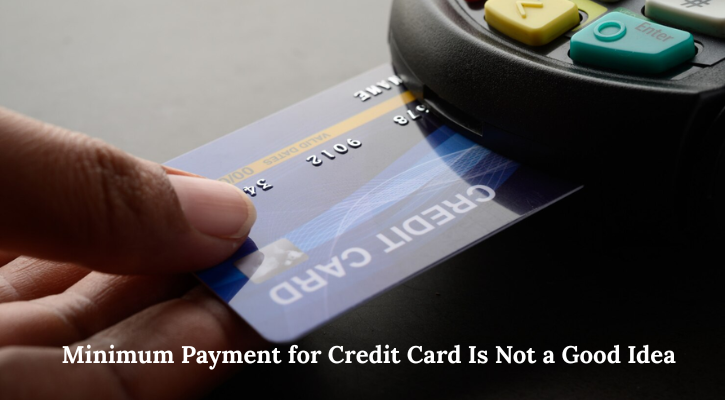
You get your credit card statement. Balance outstanding: ₹50,000. Minimum amount due: ₹2,500.
What's your thought? "I will pay the minimum this month. Money's tight."
Eleven years down the line, you have paid ₹33,000 as minimums. Your balance stands at ₹128,440. You've paid ₹95,000 as interest. The initial ₹50,000 purchase has cost you nearly 2.5 times more as you continued paying the minimum.
That's what we call the trap of credit card minimum payment. Yes, it's deliberate. Yes, it's profitable for the banks. And yes, it ruins borrowers financially.
This is a comprehensive guide to help you understand minimum payment and escape the trap.
What is Credit Card Minimum Payment?
Simplified definition: It is the lowest amount one can pay without incurring late fees and keeping his account alive.
Usually, it is 2%-10% of the total outstanding balance + any interest accrued + any EMI due.
Example:
Total outstanding: ₹10,000
Minimum payment (5%): ₹500
But you have to pay ₹10,000 total.
Payment of ₹500 helps you to keep your account alive. It avoids:
Late fee (₹500+ penalty)
Temporary blocking of your card
Any damage to your credit score (initially)
Account closure
However, here comes the catch. It does not reduce your debt. The outstanding ₹9,500 will continue earning an annual interest rate of 30%-45% (2.5%-3.75% per month).
Read More: Credit Card Loan vs Personal Loan in India
Why Interest Compounds So Dangerously
Month 1:
Balance: ₹50,000
Interest (3.5% monthly): ₹1,750
You pay minimum: ₹2,500
Net reduction: ₹750
New balance: ₹49,250
Month 2:
Balance: ₹49,250
Interest (3.5% monthly): ₹1,724
You pay minimum: ₹2,500
Net reduction: ₹776
New balance: ₹48,474
See the pattern? Most of your minimum payment goes to interest. Only ₹750-₹776 reduces principal. So even after paying ₹2,500 for 12 months (₹30,000 total), you've reduced the balance only ₹1,000. Interest consumed ₹29,000.
This is a compounding trap: Interest on interest, month after month, forever.
Impact on Your Credit Score
Minimum payment strategy destroys credit scores in two ways:
1. High Credit Utilization
₹50,000 balance on ₹100,000 limit = 50% utilization
Ideal: <30% utilization
Each month you pay minimum, utilization stays high
High utilization = 50-100 point CIBIL score drop
Lower score = future loans rejected or 2-3% higher rates
2. Debt-to-Income Ratio
Lenders see you carry high balance for years
They assume you can't afford to pay
Loan eligibility shrinks
When you finally apply for new credit, lower score means higher interest
Result: You've paid interest for years, balance barely moved, credit score crashed. Future loans are now expensive.
Real Scenario: 5-Year Comparison
Option A: Minimum Payment Only
₹50,000 balance
₹2,500 monthly minimum
Duration: 11+ years
Total paid: ₹128,440
Interest cost: ₹78,440
Option B: Pay ₹5,000 Monthly
₹50,000 balance
₹5,000 monthly payment
Duration: 12 months
Total paid: ₹54,000
Interest cost: ₹4,000
Savings: ₹74,440
The difference? Doubling the payment. From ₹2,500 to ₹5,000 monthly.
How to Escape the Minimum Payment Trap
Strategy 1: Paying the Whole Amount Monthly
Best strategy: Pay off all of your outstanding balance every month.
No interest, no debt trap.
Requires that you have adequate cash flow.
Strategy 2: Personal Loan Debt Consolidation
Take personal loan at 11-13% (against credit card 30-45%)
Pay off your complete credit card balance in one lump-sum payment.
Then repay personal loan over 3-5 years using fixed EMI.
Strategy 3: Balance Transfer Card
Some cards allow 0% interest for 6-12 months on your balance transfer.
Transfer the balance to such a card.
Make payments at zero interest during this promotional period.
Strategy 4: Debt Consolidation Loan
Personal loan products available specifically to consolidate credit card debts.
Interest is lower compared to credit cards.
Fixed repayment schedule (you will know when you'll be out of debt)
Strategy 5: Aggressive Payment Increase
If you're in minimum payment mode, increase it gradually.
Start with ₹2,500 minimum -> next month ₹3,500 -> next month ₹4,500 -> ₹5,000 and so forth.
Every ₹1,000 of increase in payment will accelerate your debt payoff and save interest.
Why Banks Like the Minimum Payment
From the bank's point of view, minimum-payments users are the best customers:
You pay the interest rate of 30-45% p.a. (highest margin for bank).
You don't default (your account stays in good standing).
You probably continue to use the credit card (increasing your debt).
You stay profitable for years.
Math from the bank's point of view: ₹50K borrower making only minimum payments = ₹78K in interest income. 156% profit on your initial debt. Nothing else earns so much for the bank.
Minimum payment has been engineered so that you become profitable to the bank, not for you.
CreditMitra: Consolidation Solution
Instead of struggling with minimum payments forever:
Assess your credit card debt - How much is the total? What is the interest rate?
Personal loan quote - CreditMitra offers personal loans at 11-13% rates
Compare the costs - minimum payment versus personal loan for 3 years
Consolidate - personal loan used to pay off credit card debt in full
One EMI - simpler than managing multiple minimum payments
Just one loan, one fixed EMI, definite endpoint and huge interest savings.
Frequently Asked Questions: Short Answers
Q: Can I ever make minimum payments on a credit card?
A: As an emergency measure only. Once or twice per year is fine. But habitual minimum payments means debt trap.
Q: Can I negotiate for a lower interest rate?
A: No. Credit card interest rate is set at 30-45% p.a. No room for any negotiations. Your only alternative is personal loan at 11-13% rates.
Q: How do I know if I am caught in the debt trap?
A: If your balance hasn't decreased over 6+ months despite your payments = debt trap. Only interest payments are being made.
Q: Can I repay credit card debt faster?
A: Yes. Just double your minimum payment amount (₹5,000 instead of ₹2,500) and you'll clear the balance within 1 year instead of 11 years.
Q: Do I have to cut up my credit card?
A: Not necessarily. Just change the behavior: either pay off full balance monthly, or don't spend more than what you can repay.
Action Plan
Figure out your debt level - How much do you owe on a credit card?
Check your minimum payments - Are you making minimum payments?
Real cost of minimum payments - Use EMI calculator: balance, 36% annual interest, minimum payment, years it takes and the cost
Choose your course of action - paying off in full, consolidating, or increasing payments
Take action - implement today. Every month in minimum payment debt trap costs you ₹2,000-₹5,000 in interest
Debt trap and its math are real. The cost is real.
But you have choices. Make one today.
About the Author

Divya Kumari
SEO Strategist & Finance WriterDivya Kumari is an SEO & Content Strategist with experience in organic traffic growth, topical authority building, and content-led SEO strategies. She specializes in creating user-focused content for finance and SaaS websites, helping brands improve visibility through structured content planning, internal linking, and search optimization techniques.
Borrow. Protect. Grow.
All in one app.
- Compare loan offers
- Buy insurance in minutes
- Invest in mutual funds
- Check credit score free
- Track all your applications


Explore More Articles
7 Days Loan App: Real Cost, Risks and Safer Options

What to Do When Your Travel Budget Falls Short
On this page
About the Author
Divya Kumari
SEO Strategist & Finance WriterDivya Kumari is an SEO & Content Strategist with experience in organic traffic growth, topical authority building, and content-led SEO strategies. She specializes in creating user-focused content for finance and SaaS websites, helping brands improve visibility through structured content planning, internal linking, and search optimization techniques.
Borrow. Protect. Grow.
All in one app.
- Compare loan offers
- Buy insurance in minutes
- Invest in mutual funds
- Check credit score free
- Track all your applications