What is a Credit Report? Simple Definition and Guide
This complete credit report guide explains what a credit report is, how credit bureaus like CIBIL and CRIF generate reports, what information lenders check, and how a good credit report impacts loan approvals in India.

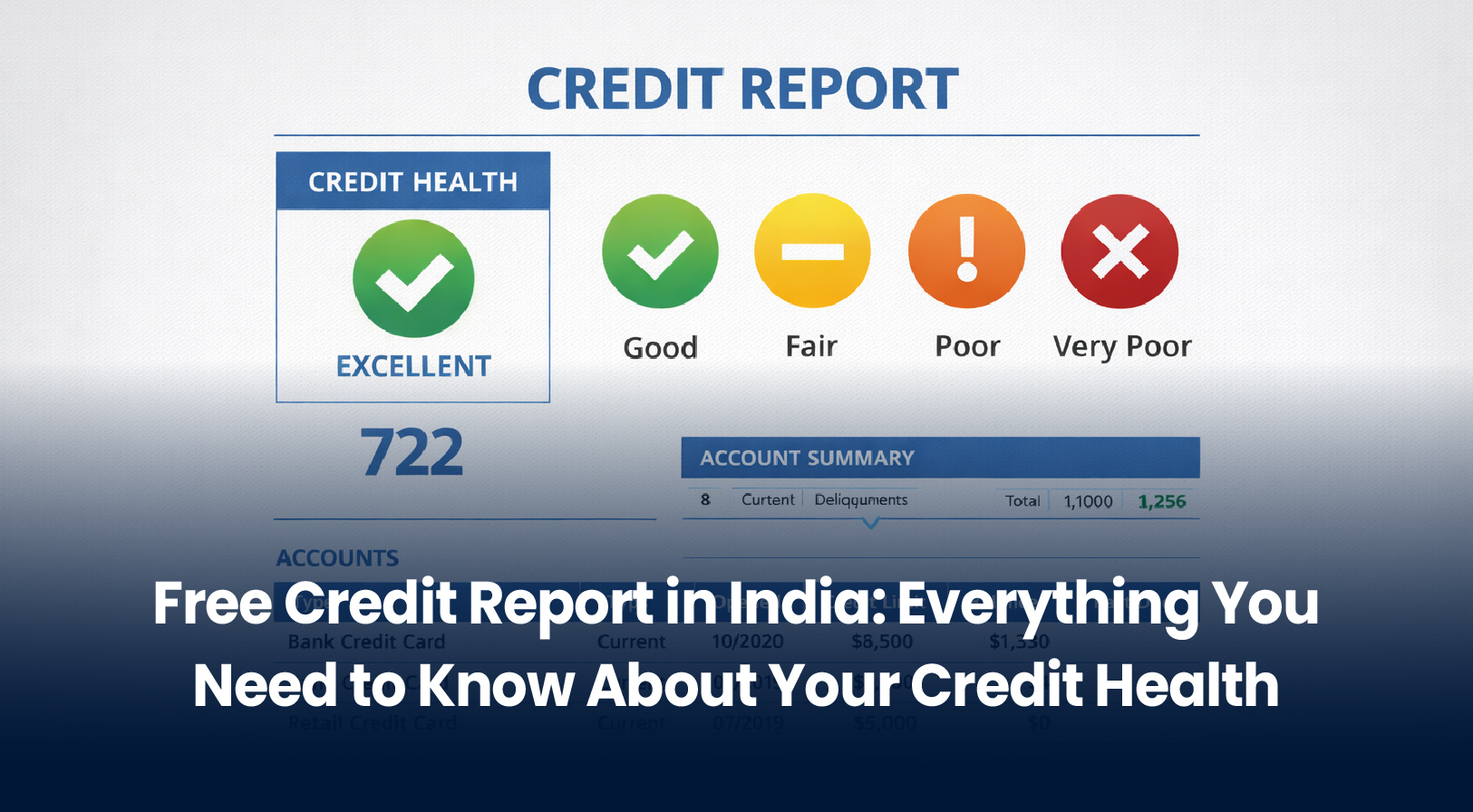
It is a comprehensive report about your credit history made by the bureaus, listing out your loans, cards, payments, and inquiries. That's all. Now let me explain what that means. Most people get confused between the two. They are NOT the same: Credit Report: Document (comprehensive, multi-page) All your history Free once/year Indicates WHY you are creditworthy Credit Score: Numeric (300-900) Brief summary Generally paid (₹99-299) Indicates HOW creditworthy you are Remember this: Report = book, Score = rating on the back Your name, date of birth, PAN, address, phone number, email ID. To make sure it’s really you. Look out for: Typos, addresses that are not valid anymore, different versions of your name. All your past and current loans and credit cards. For each account, you’ll see: Account Type: Personal loan, home loan, car loan, credit card Date of opening/closing Credit limit/loan amount Balance outstanding (what you owe now) Payment status (active, overdue, closed) E.g. Your ₹5 lakh personal loan from SBI opened in March 2023, currently ₹3 lakhs owed. How you made payments for each account in the last 36 months. This has the biggest impact on your credit score. You'll see: Monthly payment details (whether on time or not), days overdue if there were any delays, amount paid against amount due. Just one late payment can reduce your score by 20-50 points. Making payments on time builds your reputation. Any inquiry about your credit history by lenders (when you applied for a loan/card). There are two types: Hard inquiry (made when applying for a loan): Visible to lenders, slightly reduces your score. Soft inquiry (you made the inquiry yourself): Invisible, doesn't affect your score at all. Multiple hard inquiries in a small span indicate financial stress = danger sign for lenders. Lists out any unpaid accounts that have been handed over to collection agencies or any defaults (overdue for 3 months or more), or settlement cases (where you agreed to pay something lesser than the amount). These are major red flags for lenders. Read More: Credit Score vs CIBIL Score: Complete Guide Most important one in India (>80% of lenders check CIBIL scores) Oldest and largest database Your CIBIL report is most important one for loan approvals Growing popularity in India Many lenders use CRIF score (especially for auto/personal loans) You should keep an eye on your CRIF score It has different data than CIBIL (some lenders do not report to CRIF) Well-known international credit bureau Increasing popularity in India Different database = different report Newest bureau in India Broad data coverage Increasing adoption by lenders Bottom line: If you can, check all 4. CIBIL is more important, but some lenders check others too. Banks and other financial institutions report to credit bureaus every 15 days (RBI regulation). They report following data: Your payment history Amounts of loans and their statuses Credit card balances Application information Performance (on time or delayed) What they DON'T collect: Your income Your employment Your spending habits (except credit card spending) Personal information irrelevant to your credit A good report contains following features: On-time payment history (36 month track record) Low credit utilization (under 30% of credit card limits) Credit diversity (both loans and credit cards, no only one type) Small number of inquiries (1-2 inquiries per year are normal) No defaults/collections (the most important thing) No duplicate entries/errors You don't need to be perfect. One late payment is fine. All you need is on-time payments in the last 6-12 months to see dramatic improvement. FALSE. When YOU check your report, it's called a soft inquiry and doesn't affect your score. Hard inquiries (from lenders) slightly reduce your score. You may check your report any number of times you want. FALSE. Each bureau has independent databases. CIBIL may have different information than CRIF. Lenders report to bureaus they work with. That's why you should check all 4. MISLEADING. CIBIL is more important (80%+ of lenders check CIBIL score), but many of lenders check several bureaus. It's safer to have a good report in all 4. FALSE. Error in your report can destroy your score. Someone listed a loan you never applied for? Your on-time payment shown as late payment? You need to fix this immediately. FALSE. Your credit history is not permanent. Negative entries age: Late payments: visibility becomes lower after 7 years Defaults: impact becomes smaller after 3-5 years Collections: can be fixed via dispute/resolution Lender checks your report to decide: approve or reject? Generally: Clean report = easy approval Some issues = difficult approval Defaults = rejection The same loan, but different interest rates based on quality of your report. Example: Good report = personal loan at 9% Fair report = personal loan at 14% Bad report = personal loan at 18%+ Difference in ₹5 lakhs over 5 years? Up to ₹1.5+ lakh in additional interest expenses. Your report affects the amount lenders are ready to lend you. Example: Good report = loan approved for ₹10 lakh Fair report = loan approved for ₹5 lakh Bad report = loan approved for ₹2 lakh (or rejection) Credit cards become harder to obtain, and credit limits become lower with bad reports. More and more insurance companies and landlords check your credit report. Poor report can cost you higher deposits or rejection. Legally: You’re entitled to one free report/year from each bureau. Practically: Check every 6 months (free or low-cost options available). Smart approach: Check all 4 bureaus once yearly (rotate: Jan-CIBIL, Apr-CRIF, Jul-Equifax, Oct-Experian) Before major loan applications (definitely check 2 weeks prior) If you suspect fraud (check immediately) After closing a loan or card Most important: Check at least once yearly. Better proactive than reactive. Step 1: Note the error (wrong account listed, wrong balance, payment marked late when you paid on time, duplicate entry). Step 2: Contact the bureau directly: CIBIL: www.cibil.com CRIF: www.crif.in Equifax/Experian: Official websites and, Step 3: File a formal dispute with evidence (payment receipts, loan statements). Step 4: Bureau investigates (usually 30-45 days). Step 5: Error is corrected or you get an explanation. Timeline: The entire process can take 45-60 days, but once corrected, your score may improve 20-50 points. A: Definitely. Regular timely payments for 6-12 months will improve your report. Negative entries that are older fade away over time. Errors can be disputed. Rebuilding credit is entirely possible. A: You don’t have a credit report at all since you have no credit history. In order to build credit, you need to take small loans, use credit cards wisely, make regular payments. The process will take 6-12 months. A: No. It is confidential information. Your report can be accessed only by authorized parties (lenders, employers with their permission, landlords with their permission). A: Hard inquiry (because of loan applications) is shown on your report and has an impact on your score. Soft inquiry (when you check your credit report yourself) is not visible at all. In case your credit report is clean: Maintain good practices, make timely payments, keep utilization low, do not apply unnecessarily. In case your credit report contains some mistakes: Start disputing them, concentrate on making payments on time, reduce balances on credit cards. Anyway: Check your CIBIL score and credit report on CreditMitra free of charge. Takes 2 minutes, completely free. No impact on your score.What is a Credit Report?
Credit Report vs Credit Score: Critical Difference
What’s Inside Your Credit Report? (5 Sections)
Section 1: Personal Details
Section 2: Accounts
Section 3: Payment History (Most Important!)
Section 4: Credit Inquiries
Section 5: Collections & Defaults
4 Credit Bureaus of India and Which Report Is More Important?
1. CIBIL (TransUnion CIBIL)
2. CRIF High Mark
3. Equifax
4. Experian
Information that is Included in the Report
What Is a Good Credit Report?
Common Credit Report Myths (BUSTED)
Myth 1: "Checking My Credit Report Will Harm My Score"
Myth 2: "My Credit Report Is the Same At All Bureaus"
Myth 3: "I Only Need CIBIL, All Others Are Not Important"
Myth 4: "Errors in My Report Are Not Critical"
Myth 5: "I Have a Bad Report, and It is Permanent"
How Credit Report Influences Your Life
Loan Approvals
Interest Rates
Loan Amount
Credit Cards
Insurance and Rentals
How Often Should You Check Your Report?
What to Do If You Find Errors
FAQ
Q: Is there any way to enhance my credit report?
Q: What about the case when I haven’t borrowed money ever?
Q: Is it public information?
Q: Difference between soft and hard inquiries?
Next Steps
About the Author

Divya Kumari
SEO Strategist & Finance WriterDivya Kumari is an SEO & Content Strategist with experience in organic traffic growth, topical authority building, and content-led SEO strategies. She specializes in creating user-focused content for finance and SaaS websites, helping brands improve visibility through structured content planning, internal linking, and search optimization techniques.
Borrow. Protect. Grow.
All in one app.
- Compare loan offers
- Buy insurance in minutes
- Invest in mutual funds
- Check credit score free
- Track all your applications


Explore More Articles
7 Days Loan App: Real Cost, Risks and Safer Options

What to Do When Your Travel Budget Falls Short
On this page
- What is a Credit Report?
- Credit Report vs Credit Score: Critical Difference
- What’s Inside Your Credit Report? (5 Sections)
- 4 Credit Bureaus of India and Which Report Is More Important?
- Information that is Included in the Report
- What Is a Good Credit Report?
- Common Credit Report Myths (BUSTED)
- How Credit Report Influences Your Life
- How Often Should You Check Your Report?
- What to Do If You Find Errors
- FAQ
- Next Steps
About the Author
Divya Kumari
SEO Strategist & Finance WriterDivya Kumari is an SEO & Content Strategist with experience in organic traffic growth, topical authority building, and content-led SEO strategies. She specializes in creating user-focused content for finance and SaaS websites, helping brands improve visibility through structured content planning, internal linking, and search optimization techniques.
Borrow. Protect. Grow.
All in one app.
- Compare loan offers
- Buy insurance in minutes
- Invest in mutual funds
- Check credit score free
- Track all your applications