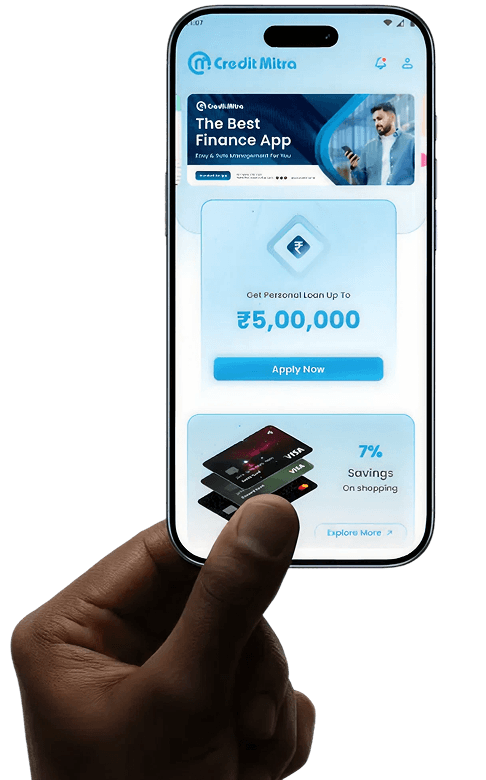
Best Personal Loan Apps in India 2026: Profile-Based Guide to Finding Your Perfect Match
Choosing the right personal loan app in India depends on more than just low interest rates. From salaried professionals and freelancers to first-time borrowers, every profile needs a different lending solution. This guide compares the best personal loan apps in India for 2026 based on approval speed, eligibility, loan amount, hidden charges, and repayment flexibility, helping you find the right match while avoiding costly mistakes and unsafe lending apps.


India has 170+ personal loan apps. 70% of them are hiding fees. 87 apps were banned for fraud in 2026. Only 30% disclose terms correctly (RBI compliance audit, 2026).
When you're downloading an app with a promise of getting ₹30k in "2 minutes," you're entering a regulatory trap.
This guide will help you navigate the jungle. This guide tells you what apps are RBI-regulated, whose borrower profile suits what loan and how to recognize apps that rip you off.
What Did the RBI Change in 2026 (Why Should You Care?)
In September 2022, the RBI issued Digital Lending Directions. In May 2025, the RBI enhanced them. In July 2026, the RBI launched its official directory of regulated digital lending apps.
Three things were changed for you:
1. Regulated entities must disclose everything
Sanction letter on the lender's (bank/NBFC) letterhead — not the app's
Interest rate, processing fee, GST, and prepayment charges upfront
Key Fact Statement before signing anything
Repayment schedule
Scammers do not disclose anything. The apps, which cannot give you a sanction letter from the registered NBFC, are unregulated.
2. Your data is not free to sell
Reading SMS (with your consent for auto-tracking)
Cannot access camera, location, or contact list without explicit permission
Do not sell data to third parties for cross-selling loans/insurance/BNPL
Almost 99% of free apps earn money by selling your data. The RBI attempted to restrict it in 2026.
3. Mandatory grievance redressal
Denied loan application? Wrong interest charged? Disbursal delayed? You have a complaint channel
RBI logs all complaints on SACHET portal
MeitY can ban apps that violate RBI rules
How to Know if Your App Is RBI-Regulated (Safety Checklist)
Before downloading, there are three things to check:
1. Is the lender in RBI's Digital Lending Apps (DLA) directory?
Visit: https://rbidocs.rbi.org.in (updated monthly)
The directory shows: App name → Regulated Entity (NBFC/Bank name) → Registration status
If your app is not listed in the directory, then it is unregulated or operating illegally.
2. Does the app reveal the lender's name upfront?
Scam apps conceal the lender until you fill 10 screens of forms.
Legitimate apps tell you right away: "This loan is provided by XYZ NBFC (registered with RBI)."
3. Does it give you a sanction letter before signing?
The RBI requires that (May 2025 directions). If the app does not provide it or wants you to sign first — forget it.
Top 10 RBI-Regulated Personal Loan Apps for 2026
Data as of: October 2026 (rates and eligibility change monthly; verify directly with app)
The Right Choice: Which App Should You Pick for Your Use Case?
Scenario 1: Salaried, need ₹30k for emergency situation, urgently
Best choice: CreditMitra or Fibe
Reason: Fastest approval (2-4 hours), for salaried, transparent terms
APR range: 10.99%–18%
Scenario 2: Self-employed, need ₹1 lakh for inventory, can wait 48 hours
Best choice: Navi or PaySense
Reason: Accept self-employed applicants, high loan amounts, flexible repayment
APR range: 14%–25%
Scenario 3: No credit score / first-time borrower, need ₹50k
Best choice: Home Credit or mPokket
Reason: Accept credit scores less than 500; minimal documentation required
APR range: 20%–36%
Scenario 4: Have multiple loans / debt consolidation, need ₹3 lakh
Best choice: MoneyView or Bajaj Finserv
Reason: High amounts, low APR for borrowers with credit history
APR range: 11%–16%
Warning Signs: What Makes an App a Scam?
1. Guarantees "100% loan approval"
No lender would approve 100% of applications. They're playing you.
2. Requests an upfront payment ("processing fee")
The RBI requires: The fee is subtracted from your loan. You never make it upfront.
Upfront payment is always a scam.
3. Won't reveal the name of the lender
Legitimate lender: "This loan is provided by XYZ NBFC (registered with RBI)"
Scam: "Will tell you after the approval"
4. Requests access to your contacts and camera and location
Legitimate apps request access to SMS and location (for transaction tracking and KYC verification).
They NEVER require cameras or contacts.
Check your app permissions: Settings → Apps → [App Name] → Permissions
5. The rate seems too good to be true (8% APR)
Even top-tier banks will offer you 10.99%+ for personal loans in 2026.
If an app offers you 8%, either it:
Isn't a real lender (will disappear after collecting the money from you)
Charges hidden fees (read the agreement carefully)
6. Approves you in 30 seconds without verifying your income
Such a lender has no risk model. It will be very aggressive with collections.
The Cost of Making a Mistake: Harish's Story (July 2026)
Needed ₹40k for an emergency bike EMI payment.
Downloaded an app, which guaranteed "instant approval"
Approved for ₹40k at "12% APR"
Didn't read the agreement: ₹8k processing fee (20%) + ₹3k insurance (they never asked for it) + ₹2k documentation fees = ₹13k additional fees
Monthly EMI: ₹1,380 instead of ₹980
Actual APR: 35%, not 12%
Instead, he could have used CreditMitra: ₹40k, 14.99% APR, ₹980/month, no hidden costs.
Difference: ₹400/month × 48 months = ₹19,200 wasted.
Why Should You Choose CreditMitra Instead of Other Apps?
We're not trying to win the "Best App" contest here. We're being frank about our position.
CreditMitra was designed for salaried professionals who need:
Fastness: 2–4 hour approval, same-day disbursal
Transparency: No hidden fees. You see what you'll pay in the offer letter.
Simplicity: In-house NBFC (no middle-man; you agree with us, not the third party lender)
Compliance: Registered with RBI, full Digital Lending Agreement compliance since the first day
We're not the cheapest: ICICI or SBI would offer 10.5% if you had 5 years of banking history there. But if you need money in 2 hours, a bank loan won't help.
We're not the fastest app. Fibe or mPokket will give you a pre-approval for ₹15k in 5 minutes. But they will charge you 30%+ APR for the speed.
We're the one who fits those who need fast, transparent, reasonable APR loans. This is who we optimize for.
Summary of Key Points
70% of loan apps are not in line with RBI regulations. Verify it in the RBI DLA directory before downloading.
Upfront payments are scams. Any fees are deducted from your loan, never paid upfront.
There's no "instant loan". "Instant approval" takes 2–5 minutes and is a soft check. Final approval takes 2–24 hours.
APR ranges are very broad (10%–36%). Choose an app based on your credit score, income and time needed, not on the rate only.
For salaried, stable income: You can get a loan with 10.99%–15% APR. Don't accept 25%+.
For self-employed, no credit history: 20%–30% is fair. Anything less is probably with hidden costs.
FAQs
Q: Can I apply to multiple loan apps at once?
A: Each application is a hard inquiry into your CIBIL score. Apply to 2–3 apps maximum per week. Multiple applications look like a sign of desperation.
Q: Can I get a ₹10k loan instantly?
A: The application process is instant (2–5 minutes), but disbursal takes 2–24 hours, since the NBFC needs to verify your bank account.
Q: What to do if I have a CIBIL score under 500?
A: Home Credit, mPokket and other microfinance apps will approve loans without CIBIL scores. Expect 25%–36% APR and ₹5k–₹1L loan caps.
Q: Can I foreclose my loan early without paying the prepayment penalty?
A: According to 2026 RBI rules, floating-rate personal loans have no prepayment penalty. Check your offer letter to make sure that it's floating-rate.
Q: What should I do if an app blocked me after my loan was approved?
A: File a complaint to SACHET portal (RBI's complaints portal) or call 1930 (National Cybercrime Reporting Portal).
About the Author

Divya Kumari
SEO Strategist & Finance WriterDivya Kumari is an SEO & Content Strategist with experience in organic traffic growth, topical authority building, and content-led SEO strategies. She specializes in creating user-focused content for finance and SaaS websites, helping brands improve visibility through structured content planning, internal linking, and search optimization techniques.
Borrow. Protect. Grow.
All in one app.
- Compare loan offers
- Buy insurance in minutes
- Invest in mutual funds
- Check credit score free
- Track all your applications


Explore More Articles
7 Days Loan App: Real Cost, Risks and Safer Options

What to Do When Your Travel Budget Falls Short
About the Author
Divya Kumari
SEO Strategist & Finance WriterDivya Kumari is an SEO & Content Strategist with experience in organic traffic growth, topical authority building, and content-led SEO strategies. She specializes in creating user-focused content for finance and SaaS websites, helping brands improve visibility through structured content planning, internal linking, and search optimization techniques.
Borrow. Protect. Grow.
All in one app.
- Compare loan offers
- Buy insurance in minutes
- Invest in mutual funds
- Check credit score free
- Track all your applications