KYC Full Form: The 5-Minute Guide to Know Your Customer
KYC stands for Know Your Customer, a mandatory verification process used by banks and financial institutions to confirm customer identity. Learn the KYC full form, required documents, verification steps, and its importance in banking and finance.

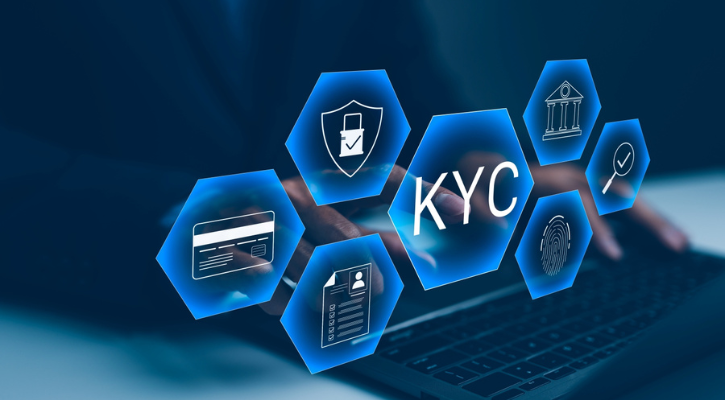
If you’ve ever opened a bank account, applied for a loan, or tried to invest in mutual funds, you’ve heard the term “KYC.” But what does it actually mean? Why do banks need it? And is it really as complicated as it sounds?
The answer is simple: KYC is just a 5-10 minute verification process that protects both you and the bank. In this guide, we’ll explain everything you need to know about KYC, from its full form to why it matters for your financial journey.
KYC Full Form: Know Your Customer
KYC stands for “Know Your Customer.”
That’s it. The full form reveals the entire purpose: banks and financial institutions need to know who their customers are. It’s a verification process designed to confirm that you are who you claim to be before they provide you with financial services.
KYC Full Form in Hindi: केवाईसी का पूरा नाम “Know Your Customer” है, या हिंदी में “अपने ग्राहक को जानें” कहते हैं।
The process might sound invasive, but it’s actually protecting you. Think of it like a bouncer checking your ID at a nightclub, it ensures only legitimate people access the services.
Why Does KYC Matter? The Real Importance
KYC isn’t just bureaucratic red tape. It serves four critical purposes:
1. Prevents Fraud and Money Laundering
Criminals use fake identities to launder money or commit fraud. KYC stops this by confirming you’re genuinely who you claim. When banks verify your identity through official documents, criminals can’t hide behind fake names.
2. Protects Your Account from Unauthorized Access
When you complete KYC, the bank confirms your identity on record. This prevents someone else from impersonating you and accessing your account. It’s security for you.
3. RBI Regulatory Requirement
The Reserve Bank of India (RBI) mandated KYC in 2002 following the Prevention of Money Laundering Act. It’s not optional, it’s the law. Banks that don’t enforce KYC face penalties and legal action.
4. Builds Trust in the Banking System
When all customers are verified, the entire financial system becomes more secure. Investors feel confident, criminals are deterred, and legitimate businesses can operate safely.
Read More: How to Improve Your CIBIL Score
The 3 Types of KYC Explained
Not all KYC is the same. Here are the three methods:
In-Person KYC (Traditional Method)– You visit your bank branch with original documents. A bank employee verifies your identity, checks your documents, takes a photograph, and completes the process. This typically takes 15-30 minutes. Most suitable for those uncomfortable with online processes or older customers.
e-KYC (Electronic/Online KYC)– The fastest method. You provide your Aadhaar number and complete verification using OTP (One-Time Password) sent to your mobile, or through biometric authentication (fingerprint/iris scan). This takes 5-10 minutes from home via your phone or computer. No paper documents needed. Modern, convenient, preferred by digital-savvy users.
CKYC (Central Know Your Customer)– A government initiative offering a centralized platform. Once you complete CKYC and receive a unique 14-digit CKYC number, you don’t need to resubmit documents to other institutions. Opening accounts at multiple banks? Use your CKYC number instead of repeating KYC. This eliminates redundancy and saves time across financial institutions.
KYC Documents: What You Actually Need
Identity Proof Documents (Choose One):
- Aadhaar Card
- PAN (Permanent Account Number) Card
- Passport
- Voter ID Card
- Driving License
- NREGA Job Card
Address Proof Documents (Choose One):
- Utility bills (electricity, water, gas) less than 3 months old
- Rental agreement with your name
- Property documents
- Bank statements showing your address
- Landlord letter confirming tenancy
Additional Requirement:
- Passport-sized photograph (recent, color)
That’s it. You don’t need dozens of documents. Just one proof of identity, one proof of address, and a photo.
How to Complete KYC: 5 Simple Steps
Step 1: Gather Your Documents Get one identity document, one address proof, and a recent photograph. Takes 5 minutes if documents are at home.
Step 2: Choose Your Method Decide between in-person (visit branch), e-KYC online, or video KYC. For speed, choose e-KYC.
Step 3: Fill the KYC Form Complete the form with your personal details, address, contact information. Online forms take 5 minutes. Ensure information matches your documents perfectly (even small spelling differences can cause rejection).
Step 4: Submit Documents & Verification For e-KYC: provide Aadhaar number and complete OTP or biometric verification. For in-person: hand over documents and photos to bank staff. For video KYC: attend the scheduled video call with a bank officer.
Step 5: Get Confirmation Receive acknowledgment receipt immediately (for e-KYC) or within 1-2 business days. Wait 2-3 business days for complete account activation. That’s it, you’re KYC-complete.
Total time: 5-10 minutes for e-KYC, 15-30 minutes for in-person.
KYC Myths vs. Reality (Addressing Your Fears)
Myth #1: “KYC Takes Days to Complete” Reality: e-KYC takes 5-10 minutes. Even offline KYC takes 15-30 minutes. The only delay comes if documents are unclear or information mismatches. Most institutions verify within 1-2 business days.
Myth #2: “KYC Costs Money” Reality: KYC is completely free. Zero charges. Banks absorb the cost as regulatory compliance. If anyone asks you to pay for basic KYC, they’re not legitimate. Verified institutions never charge for standard KYC.
Myth #3: “My Data Won’t Be Safe After KYC” Reality: Your data is highly protected. Banks follow strict RBI-mandated security protocols. Aadhaar data accessed through e-KYC is encrypted. Banks face severe penalties for data misuse. Your information is safer with banks than with you (unless you’re a cybersecurity expert).
Myth #4: “I Don’t Need KYC Again After Opening My First Account” Reality: Partially true. If you open multiple accounts at the same bank, you don’t need full re-KYC. But with different banks? You need fresh KYC, unless you use CKYC (14-digit number), which works across all institutions.
When Do You Actually Need KYC?
You need to complete KYC for nearly every financial transaction:
- Opening a bank account (savings, current, salary)
- Applying for loans (personal, home, vehicle, education)
- Investing in mutual funds
- Buying insurance (life, health, general)
- Trading stocks or opening a Demat account
- Third-party wallet transfers
- Credit card applications
Basically: No KYC = No access to financial services.
KYC and Your Financial Journey at CreditMitra
At CreditMitra, we help you access financial products, personal loans, insurance, and wealth management services. But first, you need KYC.
Here’s how KYC enables your financial goals with us:
KYC for Personal Loans: Complete KYC once, then apply for loans from multiple lenders through our platform. You don’t repeat documentation.
KYC for Insurance: Same KYC verification allows you to buy health, life, and general insurance without separate verification each time.
KYC for Wealth Products: Once KYC-verified, you can invest in mutual funds, SIPs, and other wealth-building products, all through one unified platform.
One-Time KYC, Multiple Products: This is the power of CKYC. Your single verification unlocks doors to loans, insurance, and investments.
FAQ: Your Urgent KYC Questions Answered
Q: Is KYC really mandatory?
Yes. RBI mandated it in 2002. You cannot open bank accounts, apply for loans, buy insurance, or invest without KYC. Non-compliance results in account freezing or closure.
Q: Can I complete e-KYC from home?
Yes. e-KYC can be done entirely online through your phone or computer using Aadhaar number and OTP/biometric verification. No need to visit branches.
Q: What if my KYC gets rejected?
Usually due to unclear documents or information mismatches. Solution: resubmit clear documents and ensure all details match across Aadhaar, PAN, and other IDs. Contact your institution for specific reasons.
Q: Do I need a separate KYC for each financial product?
No. One KYC covers multiple products at the same institution. For different institutions, you can use your CKYC 14-digit number to avoid repeated verification.
Q: How often do I need to update KYC?
Depends on your risk category: High-risk customers every 2 years, medium-risk every 8 years, low-risk every 10 years. Most people never need to update if information doesn’t change.
Your Next Step: Complete KYC Today
Now that you understand what KYC is and why it matters, here’s your action plan:
If you haven’t done KYC yet:
- Gather one identity proof, one address proof, and a photo
- Choose e-KYC (fastest, 5 minutes online) or in-person visit
- Complete the process today
- Access financial products within 2-3 business days
If you’ve already done KYC:
- Check if you have a CKYC number (14 digits)
- If not, consider getting one to avoid repeated KYC for new institutions
- Use your KYC status to explore loans, insurance, and investments
At CreditMitra, we make KYC seamless. Our platform guides you through the verification process and immediately connects you to financial products you qualify for. Once KYC-verified, you can access personal loans, insurance, and wealth management products, all from one dashboard.
KYC isn’t a hurdle. It’s your gateway to financial freedom. Complete it today, and unlock your financial potential tomorrow.
About the Author

Divya Kumari
SEO Strategist & Finance WriterDivya Kumari is an SEO & Content Strategist with experience in organic traffic growth, topical authority building, and content-led SEO strategies. She specializes in creating user-focused content for finance and SaaS websites, helping brands improve visibility through structured content planning, internal linking, and search optimization techniques.
Borrow. Protect. Grow.
All in one app.
- Compare loan offers
- Buy insurance in minutes
- Invest in mutual funds
- Check credit score free
- Track all your applications


Explore More Articles

What to Do When Your Travel Budget Falls Short

How to Finance Your Dream Vacation Responsibly
On this page
- KYC Full Form: Know Your Customer
- Why Does KYC Matter? The Real Importance
- The 3 Types of KYC Explained
- KYC Documents: What You Actually Need
- How to Complete KYC: 5 Simple Steps
- KYC Myths vs. Reality (Addressing Your Fears)
- When Do You Actually Need KYC?
- KYC and Your Financial Journey at CreditMitra
- FAQ: Your Urgent KYC Questions Answered
- Your Next Step: Complete KYC Today
About the Author
Divya Kumari
SEO Strategist & Finance WriterDivya Kumari is an SEO & Content Strategist with experience in organic traffic growth, topical authority building, and content-led SEO strategies. She specializes in creating user-focused content for finance and SaaS websites, helping brands improve visibility through structured content planning, internal linking, and search optimization techniques.
Borrow. Protect. Grow.
All in one app.
- Compare loan offers
- Buy insurance in minutes
- Invest in mutual funds
- Check credit score free
- Track all your applications