Top Reasons Why Personal Loan Applications Get Rejected in India
Personal loans have become one of the most popular and important option for Indians for medical expenses, education, travel, home renovation or debt consolidation. With approvals being quick, minimal documents and all processing done digitally, getting a personal loan today should ideally go smooth.
But in reality, a large number of personal loan applications are rejected every day in India.
If you want to know why personal loans get rejected, or want to make sure your next loan application get approved. This detailed guide will help. We have checked thousands of loan application, and finds out the top reasons why loan providers reject personal loan applications and how to avoid them.
1. Low CIBIL Score – Below 700
CIBIL score is the most important factor in loan application whether you will get a loan or not. Lenders view credit scores as a reflection of your credit behaviour – how you are borrowing, and how you are being responsible about repayment.
Why this leads to rejection
A low score indicates a high risk. If your score is less than 700, lenders assume that you might default, therefore they are better off rejecting than taking their chances.
How to avoid rejection
- Maintain a score above 750.
- Pay EMIs and Credit Card bills on time.
- Reduce credit card utilisation to below 30%.
- Don’t apply for too many loans over short periods of time.
2. Insufficient Monthly Income
Every lender has a minimum income threshold, which is usually from ₹15,000 – ₹20,000 for salaried people and ₹25,000 – ₹30,000 for self-employed people.
Why this leads to rejection
If your income is too low, lenders get the feeling that you may not be able to repay EMIs and thus the loan becomes risky.
How to avoid rejection
- Apply with lenders that have minimum income criteria that meet your income.
- Demonstrate further income (freesolancing, rental, incentivization) – if permitted.
- Improve your eligibility by means of a co-applicant or guarantor.
3. High Existing EMIs (High Debt to Income Ratio)
Your debt-to-income (DTI) ratio indicates the percentage of your salary that you use to cover other EMIs.
Why this leads to rejection
If more than 40-50% of your income is already being spent on repaying your loans, lenders will consider you to be financially stretched.
How to avoid rejection
- Close smaller loans before applying.
- Think of consolidating debt in order to reduce EMIs.
- The longer the loan tenure, the lower the personal loan EMI will be.
4. Unstable Job or Changing Frequently
Stability is extremely important in applying for unsecured loans.
Why this leads to rejection
If you are someone who has changed your job frequently or have been employed for a shorter period of time than 6-12 months, lenders assume that your income may not be steady.
How to avoid rejection
- Apply once you have been in your present job for at least 6 months.
- Avoid applying during your probation period.
- Provide other proof of income, if possible.
5. Incorrect or Incomplete Documentation
Surprisingly, many applications are stopped because of errors or missing documents.
Common issues with documentation
- Mismatch in PAN/Aadhaar/ Bank details
- Identity/address proofs expired
- Uploaded Blurred or unreadable documents
- Inconsistent income documents with bank statements
How to avoid rejection
- Re-check all documents carefully before uploading.
- Make sure your details of Know Your Customer are consistent in all sources.
- Use clear scanned copies not photos with shadows and glare
6. Too Many Loan Applications in Too Short a Time
Each application makes a hard inquiry on your credit report.
Why this leads to rejection
Multiple inquiries indicate credit hunger, which is indicative of financial stress. Lenders see it as a red flag.
How to avoid rejection
- Don’t apply to a lender of multiple lenders at one time.
- Use soft-check tools to determine if you are eligible for the application.
- Allow at least a 3 month interval between applications.
7. Bad Credit History on Loan or Credit Card
Delays of payment remain on your report years later.
Why this leads to rejection
Even the tiniest of delays, as few as 30 days, can reduce your score and destroy your creditworthiness.
How to avoid rejection
- Pay all dues on / before the due
- Enable autopay mandates.
- Clear out overdue amounts before filing for a new loan.
8. Not Meeting to the Lender’s Internal Policies
Every lender has its own eligibility criteria.
Examples
- Minimum age: usually 21 to 60 years
- Minimum income Varies by city/ profile
- Maximum FOIR (fixed obligation to income ratio) Limits
- Employment type: some lenders will not take newly self employed applicants
- Geographical limitations: these lenders will not loan at some areas.
How to avoid rejection
- It is always important to read the criteria before applying to the lender.
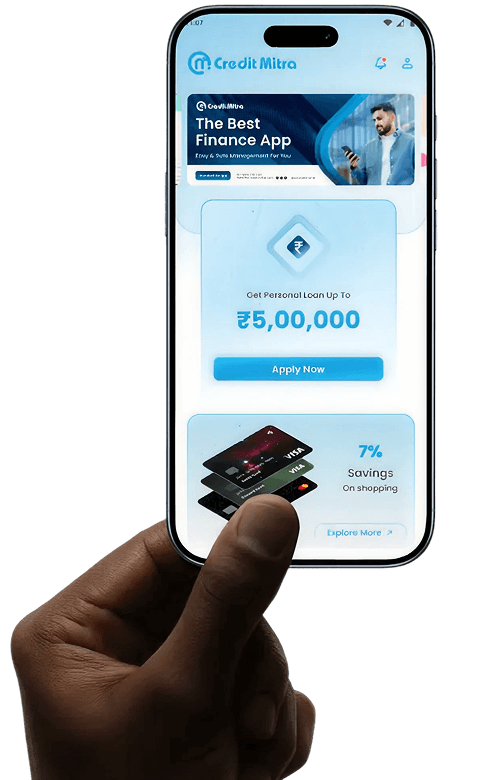
- Use a multi-lender platform such as CreditMitra to match with the lenders who you are eligible for, instantly.
9. When an Applicant has No Credit History (Thin File)
Many young professionals are being rejected for loans even though they have no negative history.
Why this leads to rejection
No credit history means no lenders cannot assess your repayment behaviour.
How to avoid rejection
- Started with the credit card, small consumer durable loan.
- Use it for 6 – 12 months and make timely payments.
- Build your credit profile before you apply for a big personal loan
10. Job Profile or Category of Company Not Eligible
Some lenders group companies and professions according to stability.
Why this leads to rejection
Employees from sectors that are risky or companies that are not listed may be perceived as risky by traditional lenders.
How to avoid rejection
- Apply with the digital lenders and NBFCs with the flexible policies.
- Provide other documents such as offer letters, appraisal letters, or contracts.
11. Bank Statement Red Flags
Lenders have a look at the last 3-6 months of your bank statements.
Common red flags
- Frequent overdrafts
- Low average monthly balance
- High cash withdrawals
- Salary not credited on regular basis
- Returned cheques
- Heavy gambling/speculative trading transactions
How to avoid rejection
- Maintain a healthy balance
- Avoid negative balances
- Clean and stable salary accounts
- Stay out of large cash withdrawals before application
12. Loan Amount Too High for your Profile
Even if you are eligible, requesting more than your income can afford could get you rejected.
Why this leads to rejection
Lenders base your maximum eligible loan on income, FOIR and credit score.
How to avoid rejection
- Use an EMI calculator and only take borrowings which you can repay.
- Choose for longer tenure of repayment so that EMI is reduced
- Apply for less money if you have a small income.
13. Mismatched Information in the Application
Even if they are small mismatches, it causes suspicion.
Examples
- Different date of birth in different ids
- Name spelling variations
- Employer name mismatch
- Declared income not equal to bank statements
How to avoid rejection
- Proof read and make sure you have checked your details.
- Ensure that there is consistency throughout all documents.
How CreditMitra Is Helping You Get A Higher Chance Of Getting Personal Loan
While traditional banks follow in-built strict rules, CreditMitra’s digital-first approach on the basis of smart eligibility match. You receive: not by chance, but by reason of your application.
- Pre-checked loan offers based on salary, city and credit score
- Increased speed in obtaining approvals
- A totally paperless and secure process
- Guidance to help improve your credit profile before trying to get credit
This means improved prospects of approval and lower interest rates.
Final Thoughts
A personal loan rejection is not the end – it’s only feedback. Most rejections occur for easily avoidable problems such as wrong documents, low credit score or over-borrowing. If you know why and prepare accordingly then your chances of approval can increase substantially.
By having a good profile in terms of credit, organising your documents, keeping your income stable, and applying through trusted websites like CreditMitra, you can get access to funds in no time without unnecessary delays and rejections.

How to Get a Personal Loan Approved Fast in India (2026 Guide)
Credit Card Loan vs Personal Loan: Which Option Saves More Money?