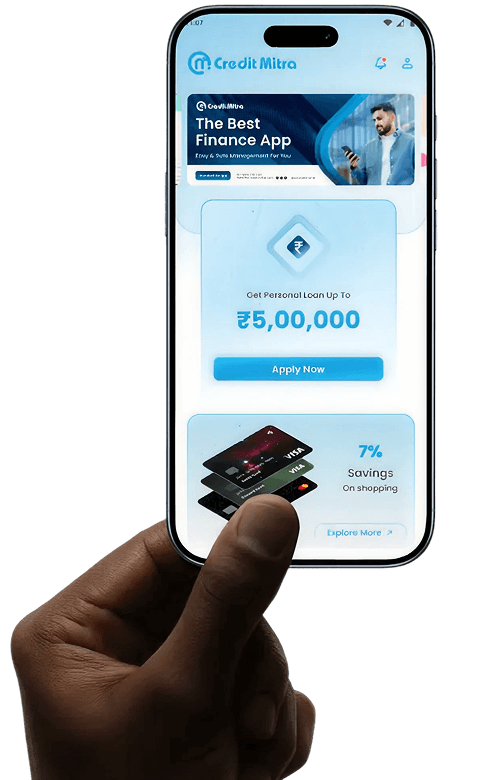
How Fintech is Transforming Personal Lending in India (2026 Trends)
In a matter of a few short years, there has been a silent revolution in the Indian lending landscape. Traditional bank-led personal loans are no longer the sole – or even the most typical – way to credit. Instead, there have been fintech companies and digital-first NBFCs that have become a powerhouse disruptor. They use a combination of technology, data, and regulatory developments to help bring faster, more inclusive, and more customised credit solutions to the millions of Indians.
In 2026, this disruption has gone even deeper — and the impact can be seen. From urban millennials to those working in gig jobs in Tier-3 towns, to the millennial professionals moving into their first apartments, fintech-enabled lending is turning online patterns of borrowing, creating access to credit for sections of the population that were earlier unserved, and reshaping our perception of what it means to take a “loan.”
In this blog, we examine how in India the use of fintech is revolutionising personal lending, why that is, the benefits, the risks – and what it means for borrowers like you (especially borrowers using/opting for apps like CreditMitra).
1. Fintech’s Increasing Pie: What the Numbers Say
- Record number of personal loans were disbursed by fintech NBFCs in FY 2024-25 that is 10.9 crore loans amounting to ₹1,06,548 crore. That’s a massive volume and it attests to the level of fintech in retail credit.
- By volume, fintechs issued about 74% of all personal loans for that year — even though by value fintech makes up a smaller share compared to traditional large-ticket bank loans.
- Fintech lending is biased toward younger borrowers. 66% of the loan value was to those under the age of 35.
- And it’s not just metro Indians – fintechs are also aggressively expanding in Tier 2 and Tier 3 towns as well. In 2025, about 39% personal loans by fintech were sanctioned to borrowers from Tier-III towns and above.
What this means: Fintech is no longer an outside phenomenon – it is now mainstream. For the large volume of Indian borrowers, the go-to for personal loans is fintech NBFCs. The model is working — at scale.
2. Why Fintech Works: The Advantage over Traditional Lending
Why are so many borrowers turning to fintech for their loans (specifically personal loans)? Because fintech is a technology that has multiple benefits over traditional bank-driven lending.
Speed & Convenience: Real Time, Digital, Paperless.
- With the fintech loans, the whole process — application, KYC, approval, disbursement — can occur online. No branch visits, no lengthy pieces of paperwork, no tedious waits.
- For small and medium amounts of loans, many apps will grant almost instantaneous approval, sometimes only within minutes or hours. This speed is commensurate with modern borrowing needs, especially in times of emergency, urgent expenses or small ticket needs.
- The “digital-first” nature is suited to India’s growing penetration in smartphones and the internet – borrowers in urban, semi-urban, and rural areas can make an application from home.
Accessibility to Underserved & First-Time Borrowers
- Fintechs often service “new-to-credit” individuals — individuals who don’t have much credit history or do not have traditional documentation. According to reports, fintechs are offering small-ticket loans (often below ₹50,000) to such borrowers, which is helping to increase financial inclusion.
- The flexibility of fintech underwriting — sometimes using alternative data (bank transaction history, spending patterns, UPI history, etc.) — is a way to help freelancers, gig-workers or people with irregular incomes access credit when traditional banks may reject them. Analytical and technology-based underwriting is becoming more prevalent.
Customization & Flexibility
- Fintechs can facilitate different loan sizes — micro-loans (a few thousand rupees) to personal loans of a larger size — to help borrowers choose the loan size that fits their need, without over-borrowing.
- They are able to customize the repayment, tenure, EMI timings and even offer features such as part prepayment, top-up, or flexible repayment as per the income cycle (great for freelancers and self-employed borrowers).
- Many fintech apps are merging loan offers with budgeting tools, payment trackers or personalized offers, making them more similar to financial wellness platforms than to financial wellness platforms and credit providers.
Financial Inclusion outside of Metro, India
- Fintechs are quickly entering smaller towns and rural areas, offering access to people who had very limited access to formal credit in the past. As mentioned, almost 40% of personal loans through fintech went to Tier-III and higher in 2025.
- This expansion is helping bridge the access to credit gap — making it possible for even low-income, first-time borrowers to access regulated and formal loans as opposed to informal lenders.
Youth & Gig-Economy Friendly
- Younger borrowers (under 35), gig workers, freelancers – groups that tend to have trouble accessing traditional bank loans – are becoming the primary users of fintech credit. The customisation, flexibility, and speed is suiting their lifestyle and income pattern.
- Fintech makes credit more democratic — not just for salaried people, or people who have been around for a long time.
3. What’s New – Tech, Data & Smarter Risk Management.
The fintech revolution goes beyond “going digital” from paper to app. In 2026 more profound shifts in technology and regulation are intended for a more mature, scalable and (potentially) safer credit ecosystem.
AI, Big data & Alternative Credit Scoring
Modern-day fintech lenders are increasingly relying on machine learning (ML) and alternative data, and not just traditional credit scores. They can understand bank statements, transaction patterns, digital payments (UPI), spending behaviour, and other types of non-traditional data to determine creditworthiness — and provide access to those with thin or no traditional credit history.
This change makes the use of credit more inclusive — and more accurate. Lenders are able to make better predictions of risk, and borrowers have a fairer chance, even without having a long credit history.
Embedded Lending & Loan Aggregation;
Fintech platforms and loan aggregator marketplaces are now bringing multiple lenders and credit products to one place and helping borrowers compare lenders, loan products, interest rates, processing fee and loan terms — and choose the best fit.
This transparency and ease of comparison was near impossible a decade ago – and is a huge power for borrowers.
Improved Risk Management and Focus on Sustainability
As fintech lending increases in scale, the need for responsible credit is the new focus. Many fintech NBFCs are improving underwriting, monitoring delinquencies, and improving the quality of their portfolio to avoid excessive defaults.
Meanwhile, the regulations have also tightened around digital lending — encouraging responsible lending, transparent disclosure, and compliance. This provides a layer of security (for the borrowers) as opposed to dubious older “loan apps.”
Increasing Borrower Base: Rural, Semi-urban & Non-traditional Borrowers
Fintechs are no longer urban-centric. With increased mobile and internet penetration, as well as digital literacy, and more accessible KYC and Aadhaar/e-KYC paths, lenders have been able to reach tier-2 and tier-3 towns, small towns, and even rural areas, which have helped to expand access to formal credit across geographies.
4. What This Means for Borrowers — The Pros & What to Watch Out For.
If you’re a borrower (or about to become one), here’s what the fintech transformation means for you — in terms of very specific advantages and the risks you need to be aware of.
Pros for Borrowers
- Fast deployment of funds-nearly instant approval and disbursement — fast approval and disbursement is great for emergencies and unplanned expenses, short-term needs or needs that aren’t long-term.
- Access to credit to borrow even if you are young, a freelancer, borrows for the first time or lives in a smaller city.
- Customizable loan amounts — only borrow what you need to borrow, be sure not to over-borrow.
- Flexibility in tenure EMI Repayment – easier to accommodate loans within monthly cash flows
- Transparency: ability to compare offers of one lender to another — no blind interest rate or hidden fees.
- Financial inclusion: assisting large number of people who were previously not allowed to access formal credit
Risks & Things That Should Be Wary Of
- Because approvals are quick and easy there is the risk of over-borrowing – taking several small loans at once. Managing several EMIs can turn out to be stressful.
- Fintech driven loans have shown increasing delinquency and default rates in 2025 — as per industry reports.
- Not all loan apps are to be trusted — it is necessary for borrowers when using loan apps to check if the lenders are RBI-registered NBFCs or regulated banks. The same transformative features that make fintech powerful can also be used to abuse the system by unscrupulous players.
- Small-ticket loans often impose higher interest rates or fees for extremely short loans — as compared to carefully thought-out traditional loans or bank credit lines.
- Rapid disbursal may tempt borrowers to make impulse spending decisions as opposed to planning.
5. Things to Consider Before Taking a Fintech Personal Loan.
If you are thinking of taking loans through fintech platforms (or apps like CreditMitra), here is a handy checklist to be sure you are using the advantages — and avoiding the pitfalls:
- Check lender credentials — as it should be of any regulated NBFC or bank were authorised by Reserve Bank Of India (RBI).
- Borrow only what you need — don’t regard instant loans like easy cash loans: make plans for repaying them.
- Compare multiple offers — It is important for you to use aggregator platforms to avail interest rates, processing fees, tenure options and EMI options.
- Read all terms carefully — look for interest rate, simple and processing costs, prepayment/preforeclosure costs, hidden processing and prepayment costs.
- Use loans for productive/ planned expenses — emergencies, gadgets needed for work, genuine investments – not impulsive expenditure.
- Track your repayment capacity and EMIs — make sure that you keep EMIs comfortably within your monthly budget
- Maintain repayment discipline — timely EMI repayment is helpful in building a credit history to avail future loans or credit cards.
- Avoid doing through several lenders simultaneously — each application may appear as a hard inquiry on your credit rating.
- Be particularly careful when taking on small ticket loans — they often can charge more in interest and result in getting over-leveraged.
- Use the benefits of fintech, but be responsible with your credit, look at the loan as a tool, and not as free money.
6. What Does the Future Hold: Fintech + Regulation + Innovation
Given the pace of change and evolution, here’s what to expect over the next couple of years – and how fintech personal lending might evolve yet again:
- More robust underwriting via AI/ML: Lenders will increasingly turn to alternative data, real-time analytics, and behavior signals — which enables credit to increasingly more people, resulting in including freelancers, gig workers, and people with thin credit history.
- Built-in finance and ecosystem association: Personal loans could be featured within Core shopping applications, journey apps, learning-tech websites – at the exact instance when you require money. This “embedded lending” trend will blur lines between commerce and credit.
- Better financial-inclusion push: Fintechs will focus more on small towns, semi-urban and rural areas — that will allow credit access across India’s socio-economic spectrum.
- Stricter regulation and responsible lending norms: As day as FinTech increases, it is likely to be more regulated by regulators, and financial industry businesses will take a greater responsibility to enforce compliance — protecting borrowers from exploitative practices and enforcing transparency.
- Innovation in repayment & loan products: Expect- modular loan, flexible EMIs, custom repayment schedules, micro-loans, part-payment options, digital wallets integration, and more, making the borrowing more adaptive to real-life needs.
7. Conclusion: Fintech + You= The Future of Borrowing
The emergence of fintech in personal lending is not merely an ephemera — it’s a serious outage which is changing the way millions of Indians borrow money. It makes it a lot faster, more inclusive and more flexible in terms of credit.
For many — young professionals, first-time borrowers, gig workers, people in small towns — fintech lending has made opportunities for them that previously were closed.
But great power comes with much responsibility. As borrowers, we need to think of using these new-age loans as tools — and not as shortcuts. It will require smart borrowing, proper repayment at the right time, and proper planning to ensure we are reaping the benefits without being caught in debt traps.
If used in a wise manner, fintech-driven personal loans represent one of the greatest advances in Indian credit history — democratization of borrowing for a new generation.

How to Get a Personal Loan Approved Fast in India (2026 Guide)
Credit Card Loan vs Personal Loan: Which Option Saves More Money?